In the Picture
CSRD and CSDDD: a smaller universe and clearer boundaries
March 2026Imagine...
You are head of the ESG team of a large multinational company and are finalising the consolidated sustainability report for the 2025 financial year.
A few months ago, you acquired a company that is not subject to sustainability reporting under the CSRD. As the new subsidiary did not collect specific sustainability information prior to the acquisition, integrating it into your consolidated sustainability report is proving more difficult than expected.
However, you have heard that the European legislator has made changes to the CSRD and that you may not need to include this company in your sustainability report straight away. Is this correct?
A brief clarification.
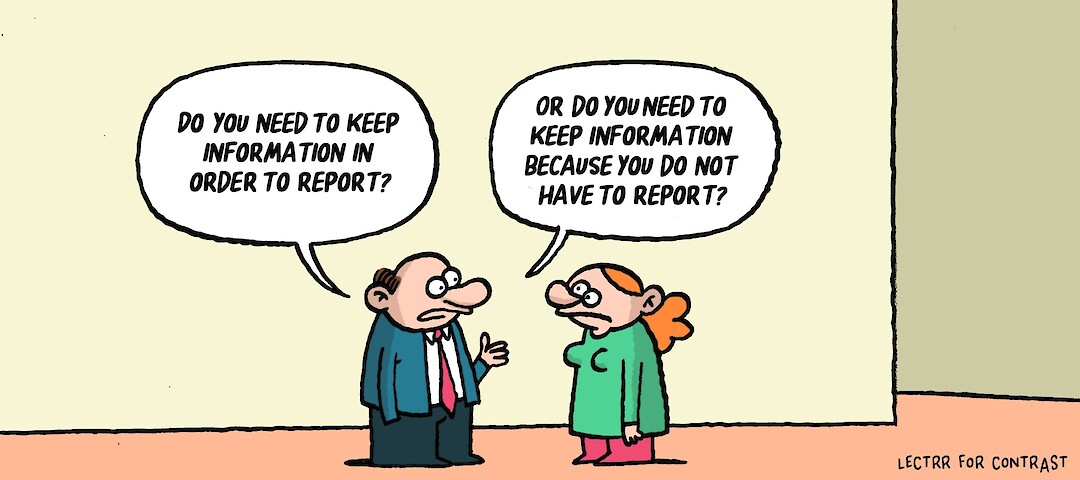
The Corporate Sustainability Reporting Directive ('CSRD') requires "in-scope" companies to report on sustainability issues such as the environment, social rights and governance in their annual reports.
Under the current CSRD, changes to the group structure are not considered. In principle, you must therefore immediately include the sustainability information of an acquired company in the consolidated sustainability report.
The "Omnibus I" package adopted by the European Commission on 24 February 2026 addresses this issue, amongst other things. This package also introduces other significant changes, affecting both the CSRD and the Corporate Sustainability Due Diligence Directive ('CSDDD'). The latter requires "in-scope" companies to establish and implement appropriate due diligence measures for their own activities, those of their subsidiaries and those of partners in their supply chain.
What has changed in the CSRD and CSDDD?
The main changes to the CSRD are as follows:
- A narrower scope. Only EU companies with an annual net turnover of more than 450 million euros and more than 1,000 employees are still covered by the CSRD. Non-EU companies are only "in-scope" if they (at group level) have achieved a net turnover of more than 450 million euros in the EU in each of the last two financial years and have at least one EU subsidiary or EU branch that achieved a net turnover of more than 200 million euros in the previous financial year.
- Voluntary standards. Companies that no longer fall within the scope may report on a voluntary basis. The European Commission will draw up voluntary standards for this purpose by 19 July 2026.
- Protection of SMEs in the value chain. Companies required to report under the CSRD may not request more sustainability information from contractual partners with fewer than 1,000 employees (the “protected companies”) than will be provided for in the voluntary standards.
- Transition period for acquisitions, mergers and exit events. Omnibus I recognises that a change in group structure during the financial year may affect the reporting process and allows for a pragmatic approach to the scope of consolidation in the financial year in which the change occurs. In the event of an acquisition or merger, the parent company may thus only include the sustainability information relating to the entity concerned in the following financial year. If a subsidiary leaves the group during the financial year, the information relating to that entity may be omitted from the consolidated sustainability report immediately.
Under Omnibus I, the Commission will also review the European Sustainability Reporting Standards ('ESRS') to make them less complex and more user-friendly.
EU Member States must transpose the amendments to the CSRD into national law by 19 March 2027. Please note that until this transposition has taken place, the original CSRD remains applicable, with no transitional arrangements for acquisitions, mergers or exit events. For the 2025 financial year (and until transposition has taken place), this means that, in principle, you must immediately include the sustainability information of the acquired company in the consolidated sustainability report.
The main amendments to the CSDDD are as follows:
- A narrower scope. Only EU companies with a global net turnover of more than 1.5 billion euros and an average of more than 5,000 employees are still covered by the CSDDD. No employee threshold applies to non-EU companies. They only fall "within scope" if they generate more than 1.5 billion euros in net turnover within the EU. In addition, higher thresholds also apply to companies that have entered into franchise or licence agreements within the EU.
- Weakening of the due diligence approach. A “risk-based” approach will suffice from now on, meaning that companies must focus on those parts of their supply chain where a negative impact is most likely (or most severe). For the analysis, they must initially rely on available information to limit the number of information requests to smaller companies.
- Abolition of the climate transition plan. The obligation to draw up a company’s own climate transition plan has been scrapped.
- No uniform liability regime. The harmonised EU liability regime has been scrapped.
EU Member States must transpose the amendments to the CSDDD by 26 July 2028.
Concretely.
- Omnibus I has introduced significant amendments to the CSRD and CSDDD. The scope of both directives has been significantly narrowed, and the "trickle-down effect" of the obligations on companies outside the scope has been limited.
- The amended CSRD provides for a transitional arrangement in the event of acquisitions, meaning that the acquired activities only need to be included in the consolidated sustainability report from the following financial year onwards. This can greatly simplify post-closing integrations.
- The new rules must now be transposed by EU Member States by 19 March 2027 (CSRD) and 26 July 2028 (CSDDD). Until transposition is complete, the existing rules remain in force and, in principle, an acquired company must be integrated immediately into the consolidated sustainability report.
Want to know more?


Please consult our website or contact one of our team members if you have questions or require more information: