In the Picture
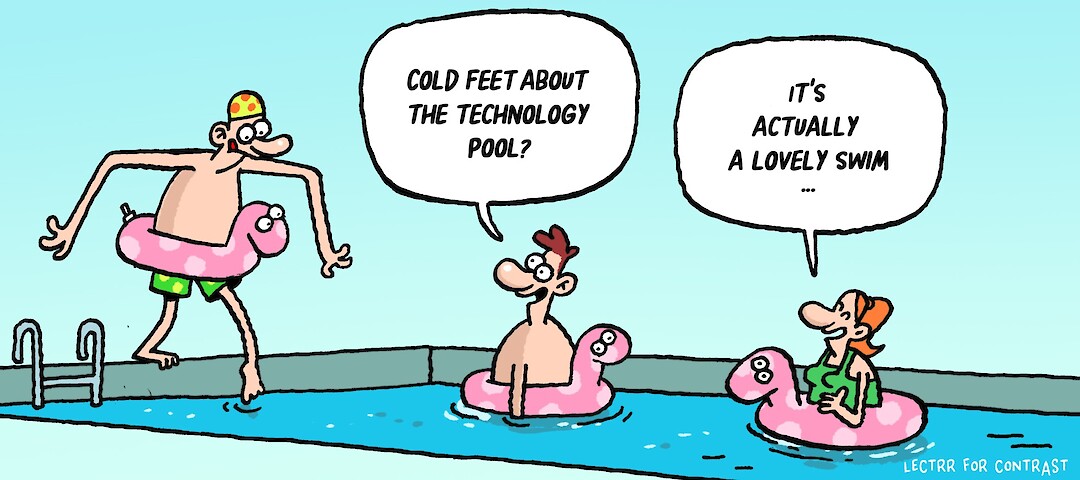
Tech on fast forward. Rules for tech licence agreements (mostly) on repeat.
May 2026Imagine...
It is Monday morning after your well-deserved holiday. You take a coffee and start reviewing your inbox.
You have a mail from your Chief Business Development Officer informing you that she identified a potential licensee for the secret recipe of your company’s exquisite innovative chocolate spread. She booked a meeting at 10 am to cover the main dos & don’ts when negotiating the terms of the licence.
Right. It all comes back. Just before you went on holiday, management decided that the company will in addition to producing its own chocolate spread, also license its secret recipe out to a few selected others.
Your CBDO already included some initial questions in her e-mail:
- “Will we be able to protect our recipe?”
- “Can we prevent our licensees from selling everywhere?”
- “Can we limit how much they produce?”
- “What about prices?”
- “And customers?”
You pause. You know that not only IP, but also competition law matters here. You remember that there is an EU competition law framework for technology licence agreements; something called the TTBER? Would that be applicable?
Your AI researcher confirms and adds that a brand new TTBER entered into force on 1 May 2026.
You take another sip of coffee. Time to get acquainted with the new framework.
A brief clarification.
Technology transfer agreements sit at an interesting crossroads of innovation and competition law. These are primarily licence agreements between two companies that allow a licensee to produce contract products using the licensed technology. That technology includes patents, design rights, software copyrights, and know‑how. So, it covers the licence agreement for the recipe if it qualifies as know-how.
On 16 April 2026, the European Commission adopted a new block exemption regulation for this type of agreements, the Technology Transfer Block Exemption Regulation ('TTBER'). This regulation creates legal certainty on compliance of technology licence agreements with EU competition law. The TTBER entered into force on 1 May 2026 and applies for a period of 12 years.
Do not let the speed of the European Commission worry you. A transition period applies. Agreements that complied with the former TTBER continue to benefit from the exemption until 30 April 2027, even if they do not fully meet the requirements of the new TTBER. In practice, the relevance of this transition period may be limited. The new TTBER is, in substance, very close to the old one. No material changes were introduced.
Alongside the regulation, the Commission adopted updated new TTBER Guidelines. The TTBER Guidelines help you to apply the TTBER, and also to assess agreements and practices related to the transfer of technology rights that are not covered by the TTBER. The new TTBER Guidelines contain some meaningful clarifications and updates.
One of the most notable novelties is a section on licensing negotiation groups (LNGs), which are arrangements where licensees agree to negotiate licence terms jointly. These arrangements are not covered by the TTBER, but the TTBER Guidelines assist in assessing them and distinguishing them from buyer cartels. Unsurprisingly, the Commission’s approach aligns with its recent comfort letter to the Automotive LNG.
The TTBER Guidelines also contain new language on data licensing and introduce a so-called soft safe harbour for technology pools, whereby two or more companies assemble a package of technology which is licensed.
In short: familiar rules in the TTBER, updated and expanded guidance in the TTBER Guidelines, and a long runway ahead.
Concretely.
What should you take away?
- This is your moment to (re)discover the TTBER and the TTBER Guidelines. They will govern the EU competition law assessment of technology transfer agreements for the next 12 years.
- The TTBER is quite liberal, since the European Commission views technology licensing agreement as generally pro-competitive, leading to the dissemination of technology and promoting innovation by licensors and licensees.
- Competitors or not? It matters. The TTBER draws a clear line depending on whether or not the parties are competitors. If they are, the licensor for instance may not interfere at all with the sales price of the contract products sold by the licensee. If they are not, the licensor may not fix prices or impose minimum prices, but it can recommend prices and impose maximum prices. Does it ring a bell? Yes, you know this rule from the VBER, the block exemption regulation for vertical agreements. But don’t just apply your VBER knowledge to technology transfer agreements, because for (territorial and customer) resale restrictions, the TTBER is more liberal than the VBER.
- Don’t be mistaken by the apparent shortness and simplicity of the TTBER and brace yourself for the TTBER Guidelines if you want to properly understand the ins-and-outs of technology transfer agreements and related cooperation.
- And remember what the TTBER does not cover: licensing of data, agreements between members of licensing negotiation groups and agreements regarding the creation of technology pools and the licensing of the packaged technology.
Want to know more?
- European Commission press release on the new TTBER
- TTBER and TTBER Guidelines
- European Commission comfort letter on licensing negotiation groups
- Or talk to us. We are happy to help you navigate technology licensing.
Back to that Monday morning. Your coffee has gone cold, but you don’t mind. No need for caffeine considering the exiting meeting ahead.


Please consult our website or contact one of our team members if you have questions or require more information: